0

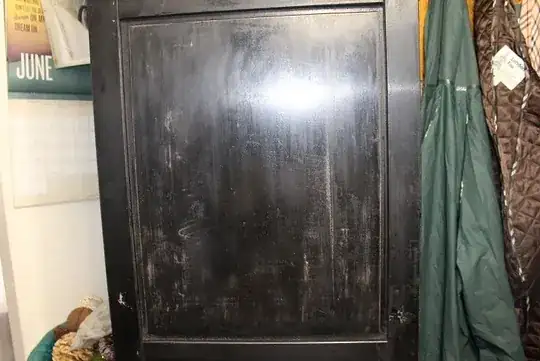
So, I embarked on this re-staining project a while ago and I made certain to Sand, Pre-condition, stain, wait for first coat to try, before applying second coat. Problem is it came out a disaster. I want to fix it but I have no idea what to do at this stage of the project. Please see a picture of the mess I made.enter image description here

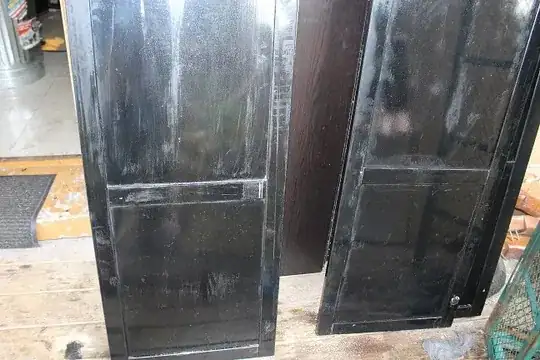
Here is another picture of the problem

enter image description here

The image below is a close up showing how uneven the staining came out. Even with 2 coats.

enter image description here

Here is another enter image description here

user272671
  • 125
  • 2
  • 4
  • 11
  • It's hard to tell in the picture - what are the lighter spots? Reflections? Sanding marks? The stain itself actually looks fairly uniform. Did you put on a separate coat of polyurethane, or were you using a stain-poly combo product? – Comintern Jul 15 '14 at 23:06
  • I have yet to apply polyuretane to it. The stain looks uniform in some places but you can see the base wood stain in some areas.And scratch marks from the sander – user272671 Jul 15 '14 at 23:21
  • I was thinking also of getting and using an orbital sander this time around so I do not end up with the marks you see from the saw. Is this a sensible move on my part? – user272671 Jul 15 '14 at 23:39
  • I'd recommend hand sanding over a random orbital with a 220 sanding sponge unless you have to go very deep. – Comintern Jul 15 '14 at 23:58
  • OK. What is the goal? To remove the stain completely so I can start over? I do have areas where the base stain shows up and I would like to fix those and also get rid of the imperfections that showed up there. I don't know how deep I need to go, if at all. – user272671 Jul 16 '14 at 00:01
  • The goal would be to smooth away any previous sanding marks and pick up any extra pigment that is sitting on the surface. When you're done, you shouldn't have a high sheen at all - it should be uniformly dull. Remember, the polyurethane will give a more uniform gloss and marks from fine sandpaper will disappear after a couple of coats. If you need spot touch-ups to add more pigment, you can do those after and blend them in. – Comintern Jul 16 '14 at 00:06
  • Is this a water based stain that you were using? – Jack Jul 16 '14 at 00:08
  • No, I used Minwax Wood Finish Ebony 2718 – user272671 Jul 16 '14 at 00:11
  • You rubbed out the finish after it sat a few minutes? What specie of wood did you stain? – Jack Jul 16 '14 at 00:11
  • No. I forgot to do that but was told that I should let it dry and then sand it. But when sanding with 000 steel wool, I see the paint is not even on the surface and sanding made it worse in some places by further exposing the original stain on the surface. – user272671 Jul 16 '14 at 00:13
  • Need to use a solvent to knock the top layer that is residing on the surface, it will displace the color evenly back over the surface, it will do nothing for the sanding marks though. MEK or lacquer thinner comes to mind – Jack Jul 16 '14 at 00:15
  • If the sanding marks are objectionable, you can take advantage of the bad stain job to sand them out properly. and use the solvent to "move around" the heavy stain to even it out, then recoat to get the color depth you are looking for. Wiping out the excess, that step it critical... – Jack Jul 16 '14 at 00:19
  • I understand I need to use a lacquer thinner to remove the top paint, but what do you mean when you say I should use the solvent to "move around" the heavy stain to even it out? I thought using the solvent will remove the coats? – user272671 Jul 16 '14 at 00:43
  • Let us [continue this discussion in chat](http://chat.stackexchange.com/rooms/15766/discussion-between-user272671-and-jack). – user272671 Jul 16 '14 at 01:00
  • So.... how did it turn out?? Pics?? Thanks for the check mark! – Jack Jul 30 '14 at 23:38

1 Answers1

1

The purpose of the solvent is to not remove but redistribute the stain that is already applied, although it will remove some of it. It will not remove what has penetrated into the grain of the wood, but it will lighten it. The solvent may even push it deeper into the grain, and that is ok too.

You can sand your project at this point, the scratches will still most likely be holding stain so you can see how far you need to go on your sanding. If you remove more stain by sanding, that should not be a problem. Presumably the lacquer thinner has evaporated before you sand, and the rest of the areas have been cleared of "excess" stain, that is, stain that has built up excessively on the surface, and all the surface has, for the most part uniform coloration throughout, before you sand.

As I mentioned in my comment earlier you can sand before the lacquer thinner, but your sandpaper will readily clog. Then you could use solvent to re-disperse the stain over the freshly sanded surface too and let it dry, Then apply the second coat of stain, rubbing it out after a few minutes, again, a VERY important step.

Which ever way you choose, the idea is to get rid of the cross scratches, disperse the heavy deposits of stain using solvent, let it dry thoroughly, and recoat with fresh stain, and rub it out after a few minutes. Rubbing out the stain removes the heavy pigments off the surface, so the clear coat you choose to use will adhere. If you do not rub it out, what you lay on as a finish will peel off in time. probably in sheets.

One last thing, if the stain still looks lighter in places than others, you can still add another coat of stain, the places that are dark will not take as much, and the lighter places will take in more stain, essentially evening out the color. After all, wood can only take on only so much pigment. You can even try localizing your added stain, only adding it to the panel or just a rail or a stile, following the joinery in the doors.

Jack
  • 32,647
  • 1
  • 21
  • 56