It should be remarked that the epithet 'Eastern' (or 'Asian') trades off correctness for practical convenience. From the viewpoint of pure theory, it is essentially a category mistake to attribute some geography to a philosophical thought, or a family of thoughts, just as to attribute nationality as in the terms British empiricism and German idealim. While admitting that such a grouping is from an outsider's (Westerner's) perspective, this should not make us disregard the geographical and anthropological connections among the philosophical thoughts originated mainly in India and China.
What we thus call Eastern philosophy is formidably diverse and profound. Furthermore, it is widely intertwined with various spiritual techniques and practices, a situation which gives way to a plethora of translations from the original texts and their interpretations. This makes even more crucial to begin with a general grasp of the topic from an authoritative source.
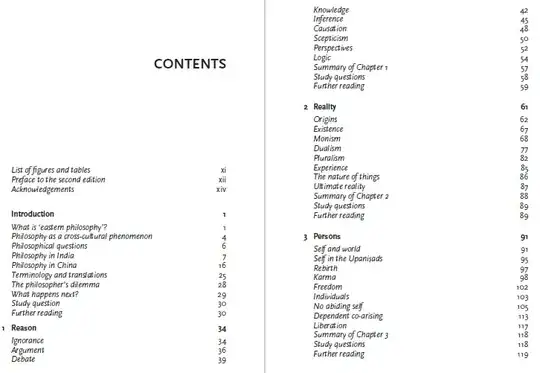
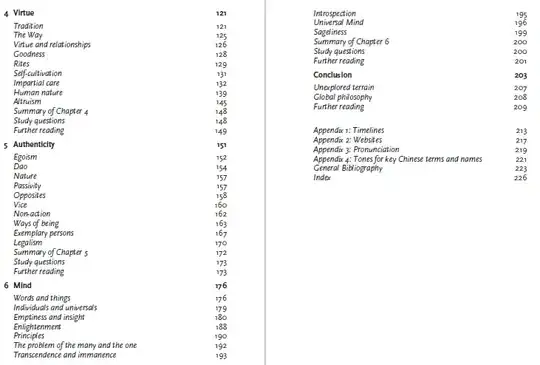
Such a source I'd recommend is Victoria Harrison's Eastern Philosophy: The Basics. I present here its table of contents (of the 2nd edition) to give an idea:
In addition to this book, I'd recommend the relevant ones from the series Very Short Introductions from the Oxford University Press. I can cite:
Hinduism: A Very Short Introduction by Kim Knott,
Indian Philosophy: A Very Short Introduction by Sue Hamilton,
Confucianism: A Very Short Introduction by Daniel K. Gardner.
Lastly, I'd like to note Key Concepts in Eastern Philosophy by Oliver Leaman and The Blackwell Companion to Hinduism edited by Gavin Flood as complementary reference sources.


