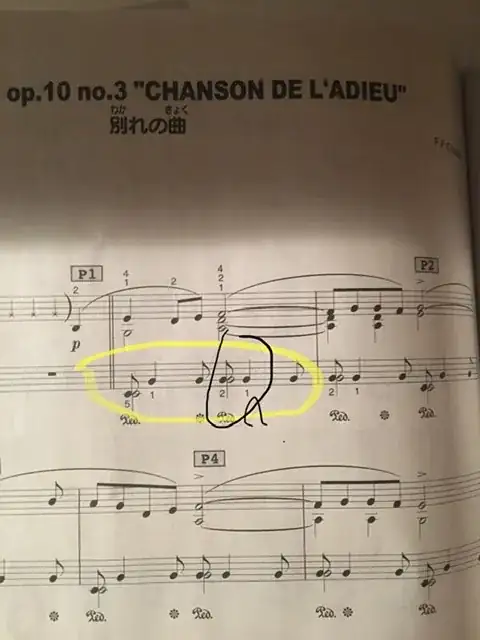
I am confused about how to play the left hand; I know that we have three sounds here but in the 3rd beat how can I hold the B and play another B? It makes sense for the first beat: hold the E and play the B, but how to play the rest?
I am confused about how to play the left hand; I know that we have three sounds here but in the 3rd beat how can I hold the B and play another B? It makes sense for the first beat: hold the E and play the B, but how to play the rest?


In reality, because the sustain pedal is holding the 1st E, and later in the bar, the B, there's no need to keep a finger on either - the pedal's job takes over.
It is often confusing seeing piano music written like this - but consider the stem direction - it's written in parts, as if for two different instruments to play the bass clef notes, and technically needs all the notes written in to fulfil the sums for note values in each bar. Play each part separately, and it may make more sense - but of course on piano, it just looks incomprehensible from the music.

In the 2nd bar it doesn't matter as the half note B is hold - like Tim says. But in some other chords with non-chord tones I think the sustain pedal isn't a good solution and I would use it carefully. If you consider the arrangement as a 3 voice piece of the melody and chords in the r.h. and in the left hand you have a bass line and a rhythmic accompaniment I wouldn't use the sustain pedal if not necessary when the bass line and the accompaniment are not the same note and only a 5th between.
It would also be reasonable to play the bass note B 8vb (an octave lower) ... but someone may say: Using the pedal must be trained too!
