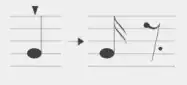
Spiccato, like most specific bowing techniques, is not often indicated explicitly in scores. The staccatissimo mark on that page does indeed often get translated as spiccato when given to a string player, but there are plenty of situations in which a regular staccato is interpreted as spiccato as well. Staccatissimo in Mozart, especially on repeated notes, is usually performed spiccato; Staccato dots in Bach, however, are often performed in the same way. I can certainly think of some situations where I've used spiccato even in situations with no markings at all, for example during a fast, repeated-note passage in music with a very light affect.
In other words, spiccato is more like a tool in a string player's interpretive tool chest--one that is very often effective for staccatissimo-marked passages. Of course, if the composer wishes to ensure that interpretive choice, they can add a written indication to that effect. That's the only explicit spiccato indication I've ever seen: either marked "spiccato" or "bouncing bow" or something to that effect.