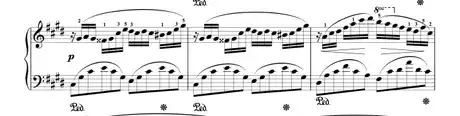
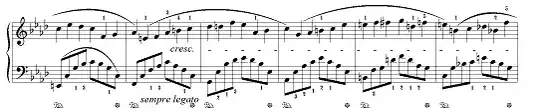
Ah, polyrhythms. They're certainly tricky, but thankfully you'll probably not need gene therapy to start feeling them. The secret to playing music with polyrhythms is internalizing them; you really haven't learned a piece until you don't have to worry about the individual notes anymore, and that includes worrying about the rhythms.
8-6 and 4-3 splits are very tricky to feel. You need to count in large, unintuitive meters to be able to find places where they sync up, and they feel very awkward. Instead, start by internalize the simpler polyrhythms. Worry about 3-2 splits.
The first step is being able to switch reliably between the two meters. The easiest way to feel a triple-duple transition is to subdivide 6/8 measures. The triple-duple split is what happens when you switch from clapping on the 1st and 4th beats to clapping on the 1st, 3rd, and 5th beats. If you still have trouble, break out your West Side Story soundtrack and clap along (I wish I could remember the name of the song I'm thinking about; something about coming to America?).
The next step is to put the two rhythms together, slowly. The way I like to do this is to play simple diatonic scales. Play your right hand in triplets and your left hand in duplets, then reverse it (make sure you start your right hand 3 octaves higher than your left hand if your left hand is in triplets). Start your scales slow and tap out your eighth notes with your foot to make sure that your splits are accurate. Once you have a good feel for that, you can slowly speed it up and lose the foot-tapping.
After that, things are downhill. To get to your 3-4 splits, you simply* need to play the duple part of a triple-duple split twice as fast. 6-8 splits are just two 3-4 splits stuck together.
* Yeah, it's not really simple. You can start by subdividing 12/8 measures, and going from there.