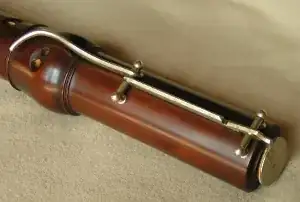
The bell key described by Lee White was invented by Dr. Carl Dolmetsch (special keys )to help the fingering for the very difficult high C#/F# (soprano/alto) note, one half-step below the the high D/G (2 octaves+1 whole step) that all baroque or modern-design recorders should be able to play easily. Without the key one must indeed stop the bell (close the bottom of the recorder) with your knee or a pillow or something similar. Some professionals can do this with ease, even playing fast notes. It's quite showy when done well.
Composers like Telemann, Handel, etc., knew this very well and very rarely called for that note.
There are fingerings for notes above that top D/G but each recorder is different and so they won't all work and most are usually very difficult to use in practice. Telemann's highest note for alto recorders is C7, which can be played cleanly but not quietly on quality instruments.
What's happening now is that modern recorders are being made longer and have an extra key or two to provide better hole spacing for the lowest holes and even extend the range down a half-step or more. This results in better, simple fingerings for the ultra-high range, so a bell key isn't needed for those instruments. See the Mollenhauer website for an example: Soprano with B Foot