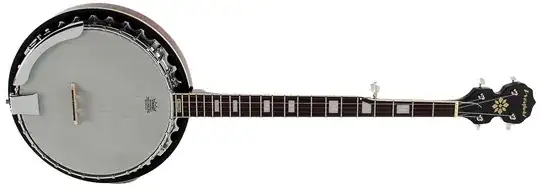
If the fifth string were to be extended up to the peghead, it would be an exact duplicate of the first string (both D notes) since they tend to be the same gauges.
But to answer: Having that string truncated at the 5th fret makes it a G note. In traditional Scruggs Style banjo, it is primarily a high-root drone string. Since most tunes on banjo are native to G, having a drone on the root is the best sounding configuration. If we capo up two frets to A, there is usually a corresponding spike or other method to also capo that truncated string down below. Then the drone would be in A for a song in the key of A.
Melodic style playing uses it primarily as a scale note. This method gives you more freedom on the first string to go around the root note since you can always grab the root itself up on the 5th string.
- Hard to manufacture? Yup. Just paid almost 2K for a new neck.
- Hard to play around? Not really, you get used to it being there.
- Do some makers tunnel the 5th string to be properly fretted at 5, but tunneled all the way up anyway? Yes. (See: Robin Smith or Rob Bishline, to start)
Regarding your side comments about some chords being impossible: It depends on how much of a purist you are. I'll try to articulate this, and I must assume some banjo familiarity...
In standard tuning, the 1st and 4th strings are tuned to D, an octave apart. The 3rd and 5th string is tuned to G, an octave apart, and the 2nd string is a B. So when fretting a D major chord with the standard "D-shape", you have the 1st and 4th strings as the F#, the 2nd string as the root (D), and the 3rd string as an A. The 5th is unchanging, for reasons explained above. Now if you were to grab the 7th tone of that chord, you would have to rearrange and grab it above on the 2nd string (reach up to the C), which means that you are jettisoning the root note. I don't believe a chord is a chord without it's own root, textbook-wise. We have to make these sacrifices a lot given our duplicate strings and restricted instrument range. So to a purist, yes, some chords are impossible, but to a banjo player they are all very possible and effective: Since we are usually playing in context of a guitar and/or bass, we have plenty of external support playing the root for us.