What are the notes I play on a piano for Bm/Gb? Does is mean play both Bm AND Gb - or - Bm OR Gb?
This is "slash chord" notation. It means play the chord to the left of the slash over the bass tone to the right of the slash. Play the chord Bm over the bass Gb.
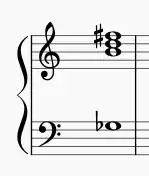
Bm = B, D, Gb
This system of chords uses what's called tertian harmony, chord built of stacked thirds above a root. You should learn to recite the gamut of letters in thirds - B D F A C E G B D... - and then you apply accidentals to set the appropriate intervals major thirds, perfect fifths, etc.
Bm is B D #F.
The alternate options of Gb or F# are called enharmonic equivalents. They are the same pitch, but enharmonically spelled differently. Chords should be spelled by what's intended. Bm is B D F# but B D Gb would be an odd augmented triad with an augmented third, surely not the intended chord.
...not in the scale of Gb major...do I need to play the closest "legal" notes that fit the scale?
No. Play what is written.
But in this case it will be a lot easier to talk about if the passage if first re-written to spell the chords correctly...
F#, Bm/F#, F#, Bm/F#, F#, Bm6
...and the scale will be F# major.
If you were to talk about this being in the key of F# major, you could then say the diatonic chord in F# major, rooted on B is a B major chord. However, in F# minor, the diatonic chord rooted on B is B minor. F# major and F# minor have the same tonic - F# - and so are called parallel keys. And, you can "borrow" chords between parallel keys. You can "borrow" Bm from F# minor and play it in F# major.
If you identify the chords with Roman numerals, it would be F#: I iv6/4 I iv6/4 I iiø4/2. The chord root B is the fourth degree of the scale so it's labelled iv. So, the progression is in F# major and borrowing the iv chord from the parallel minor.


