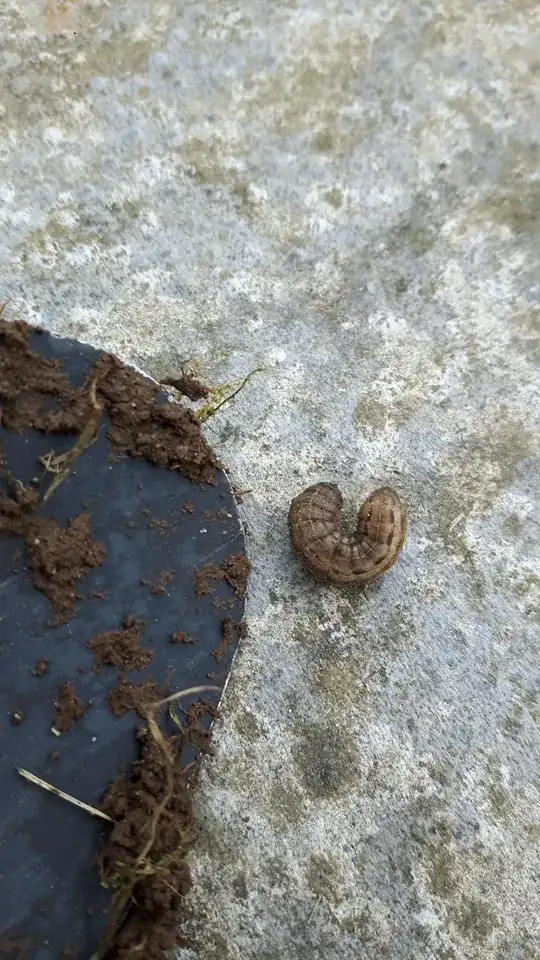
So no presents for you under the plastic then! I'm glad really - that larvae you found could be the larvae of a moth or butterfly because its not immediately recognisable as a leatherjacket, but might have been. What's odd is you found it actually under the lawn, and that isn't at all typical of moth larvae.
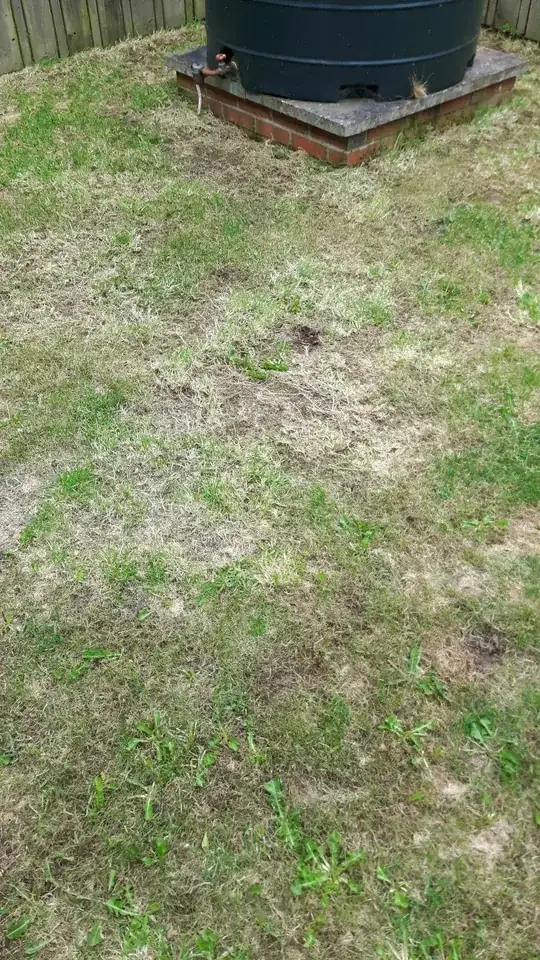
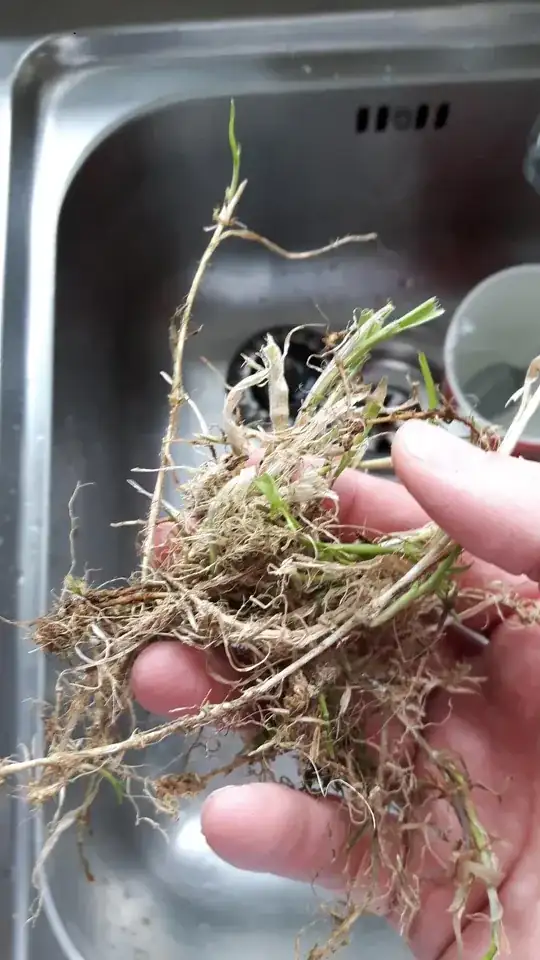
First, I'd note that your lawn is cut way too short - I know you said you had the mower on the highest setting, but perhaps there's something wrong with your mower, because, for this time of year, it is too short. I do see lots of what could be dandelions - inspect the lawn thoroughly and decide whether the ratio of weeds and moss to turf is greater than the amount of grass. If it is, you might want to consider stripping it out, including weed roots, preparing the area and laying new turf.
Otherwise, I don't know what kind of regular maintenance routine you've carried out over the previous years, but now is the time to apply a lawn feed, so use a granular preparation with a moss killer, but not a weedkiller - apply at the rates indicated on the box, at least three days after cutting, and try not to overdose. If your soil is heavy, aerate the area by inserting a garden fork about every 9/12 inches, vertically and removing it at the same angle, then feed. Apply when the blades of grass are dry, but on a day when you know rain is due within 1-3 days.
In the meantime, get some Verdone Extra, which is a liquid lawn weedkiller - you'll need a can to mix it in. As the lawn starts to grow and the weeds are growing strongly, with entire leaves and looking lively and bushy, apply the Verdone according to the instructions on the bottle. The reason I suggest a separate weedkiller is because the standard Lawn Weed Feed and Mosskiller preparations are pretty hopeless at killing weeds in lawns, so although it's tedious to apply two different products, it will be more effective.
If any moss that's present turns black, rake it out, and if that leaves bald patches that are quite noticeable, you may need to reseed those patches, but that can't be attempted until six weeks after the chemical treatments have been applied. At this point, you could scarify the lawn - it will make it look pretty awful, but it should recover quickly.
Ensure the blade/s on your mower are good and sharp; raise the height of cut on your mower so that, after cutting, there's a good inch to inch and a half of grass growth left behind. Re-apply your lawn feed 6 weeks after the initial application, depending on the instructions on the box you buy, but do not use past July. Any feed after that should be an Autumn one.
If you want more guidance, there's a book called The Lawn Expert by D. G. Hessayon - you might find the library has a copy, or a charity shop, and last time I looked, there were copies available on Amazon and Ebay. Full retail price around £14, cheaper second hand. Although the chemicals mentioned within it may be out of date, the basic routines outlined in there are entirely valid and haven't changed - contains information on how to lay a lawn, recognise and treat problems, and maintain an ongoing good lawn, including topdressing.