3

I just replaced my 30 year old tub drain flange with a new one. I have made sure that the flange is tightened.

Water goes down the new configuration just fine - it is not clogged. However, after draining, there is a tiny bit of water around the flange, and I'm wondering if this is something I should be worried about.

Here's a photo of the new flange, with standing water:
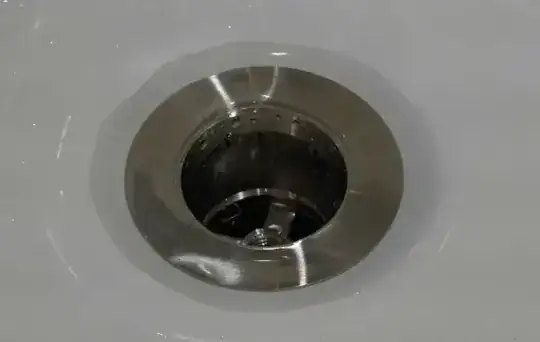
water around tub drain flange

I don't remember if, after draining, there was standing water around the old flange. I did take a look at it (the old flange) and noticed that it has a concave lip, while the new flange has a flat lip.

Will the standing water cause any problems, such as:

  1. getting underneath the flange "lip"
  2. corroding the flange
  3. some other problem that I haven't thought of
chue x
  • 525
  • 1
  • 7
  • 14
  • 1
    If you are really concerned that it's a problem, you could add some silicone caulk and create a gentle slope to alleviate the problem. – Nick2253 Apr 03 '15 at 22:09
  • @Nick - I'm a complete newbie to plumbing, so the answer to my question could very well be that it's not a problem. I'll keep in mind your idea to create a slope with caulk - thanks. – chue x Apr 03 '15 at 22:49
  • A little bit may be because the flange is a bit taller than the depression, but it kinda just looks mostly like surface tension to me. – Huesmann Jan 17 '23 at 17:27

3 Answers3

2

However, after draining, there is a tiny bit of water around the flange, and I'm wondering if this is something I should be worried about. ... Will the standing water cause any problems.

It is not a problem if all other aspects have been implemented correctly.
Because:

It's a "feature" of the geometry plus surface characteristics of the materials. The latter will change with time and may change the result (but it still doesn't matter regardless).

The "head" of water or pressure is so close to zero that the joint 'does not even know the water is there'.
In some circumstances you could get 'wicking' of fluid into a boundary between two materials by capilliary action - but a tub joint is designed to not be an example of this.

The water will evaporate in under a day in most atmospheric conditions.
Maybe not at about 0.5 degrees C and 99% humidity but in most others - and the materials used are designed to be permanently wet without other than cosmetic degradation.

Russell McMahon
  • 979
  • 5
  • 8
2

This is common and not a huge problem (I will assume that the flange was correctly set using high quality plumbers putty and is not leaking). Over time, you may notice soap residue or mineral deposits on the chrome due to this. If you are concerned about that just wipe it with a towel after bathing.

Jimmy Fix-it
  • 33,918
  • 29
  • 54
0

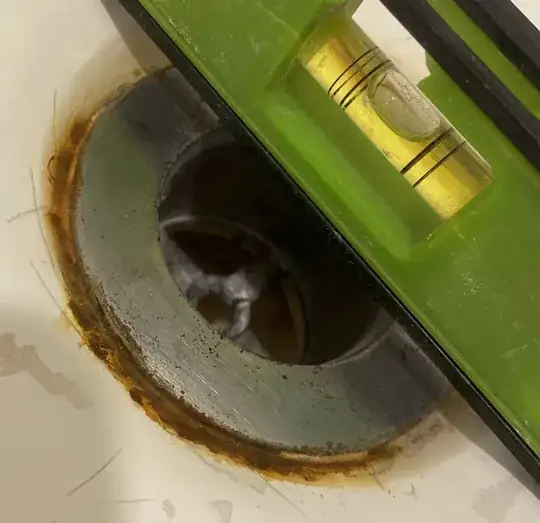
This is a problem and needs to be filled with a fiberglass resin. If not, Your tub will look like mine enter image description here

Tom
  • 1