2

We are in the midst of a kitchen remodel and yesterday had someone come and run a new gas line as we are making the switch from an electric to a gas range. This fellow is a well rated pro but I'm concerned that the way he's cut the studs (see photos) has structurally compromised them. Maybe the cleats he's put in place are enough to offset that?
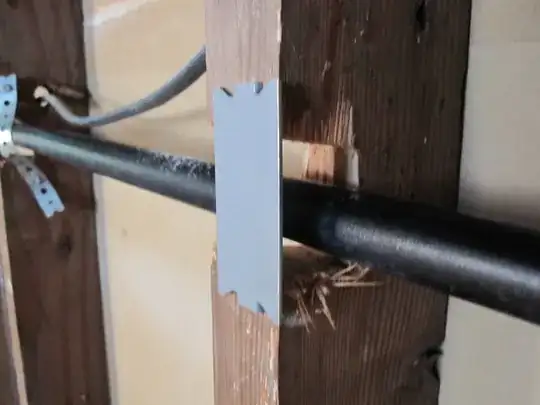
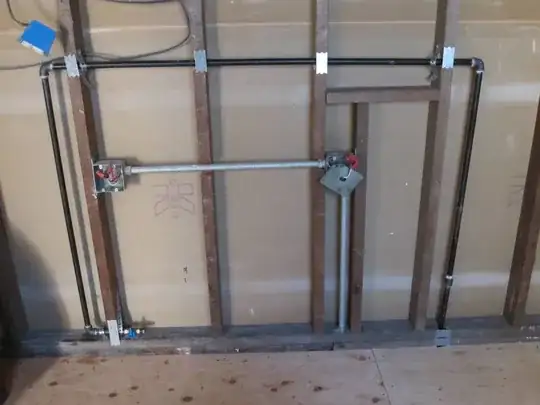
Detail of the cut in the stud Image of full gas line in kitchen

CraigPDX
  • 177
  • 1
  • 4
  • 15
  • Sometimes the gas guy doesn't care about the structure. Is it a load bearing wall? Also can you make the second question a new question? – DMoore May 20 '14 at 16:00
  • It's an internal wall that essentially frames out the hallway behind the kitchen. Beyond that I'm not certain how to discern if it's load bearing. – CraigPDX May 20 '14 at 16:29
  • Second question separated into new question.[1]: http://diy.stackexchange.com/questions/42130/how-should-i-finish-the-area-around-the-gas-line-for-my-range – CraigPDX May 20 '14 at 16:35
  • 1
    [This answer](http://diy.stackexchange.com/a/10661/33) might be useful. – Tester101 May 20 '14 at 17:15
  • @DMoore The gas guy better care about the structure. Otherwise he could loose his license, get sued, and/or have a house fall on him. – Tester101 May 20 '14 at 17:17
  • The metal plates he put in place are just to prevent someone from driving a nail into the gas line. They are not structural. – Jeff Widmer May 21 '14 at 00:59
  • That's interesting that he chose to go up and over. Was there no way for him to run the line down below? Is there a basement? – Jeff Widmer May 21 '14 at 01:03
  • @JeffWidmer there is a semi-finished basement and this was the one space he could come up without putting a new hole in the finished ceiling. – CraigPDX May 21 '14 at 15:14
  • Steel gas pipe does not need to be nail or screw protected. If you are dealing with the yellow flex, then yes. – user90828 Sep 06 '18 at 23:11

1 Answers1

3

You are allowed to notch a non-load-bearing stud up to 40% of the width. For load bearing and exterior walls they can be notched to 25% of the stud width.

https://engineering.purdue.edu/~jliu/courses/CE479/extras/Notching_&_Boring_Guide_A11.pdf

Shane Wealti
  • 580
  • 4
  • 10
  • 16
  • It is an internal wall, but I'm not certain I can discern between load bearing and not. – CraigPDX May 20 '14 at 16:21
  • Are the metal cleats he put in adding stability in any way? – CraigPDX May 20 '14 at 16:22
  • 1
    Probably some but if they are overnotched I don't know if the cleats are considered a code-approved method of reinforcement. You might need to talk to your local inspector to see what is acceptable. One of these products might be acceptable: http://www.strongtie.com/ftp/fliers/F-REPRPROTECT09.pdf – Shane Wealti May 20 '14 at 16:25
  • 4
    The metal plates protect the pipe from penetration from screws/nails (think drywall installation). If they add any structural value, that's not their intended purpose. – Tester101 May 20 '14 at 16:32
  • @ShaneWealti The Stong-Tie stud shoes are a great suggestion. I may put those in for piece of mind. – CraigPDX May 20 '14 at 18:18