6

I'm considering removing a wall in my master bathroom but I can't tell if it is a load bearing wall or not. I've done a fair amount of research. I don't have the house blueprints, and it's difficult to get above this area in the attic. The house was built in 2007. The joists are East and West, parallel with this wall. I felt pretty confident removing this wall until I cut a small hole for further examination and found several stacked two by fours at the top. Is it common to do this on non load bearing walls or am I right to be concerned? Here is a picture for reference:
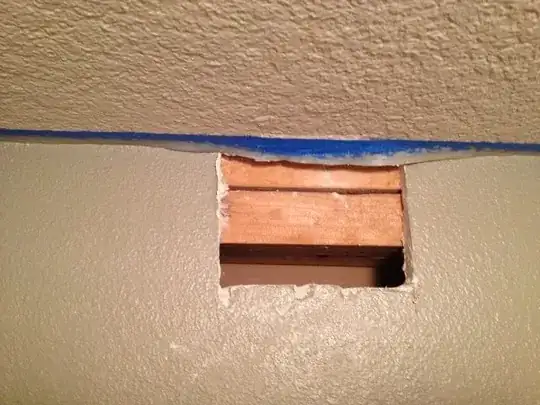
enter image description here

EDIT:

I removed some more drywall and checked in the attic. Here you can see there is a brace resting on a 2x6(?). I've never moved something like that before. Are there DIY options to continue with this project, or should I abandon hope?
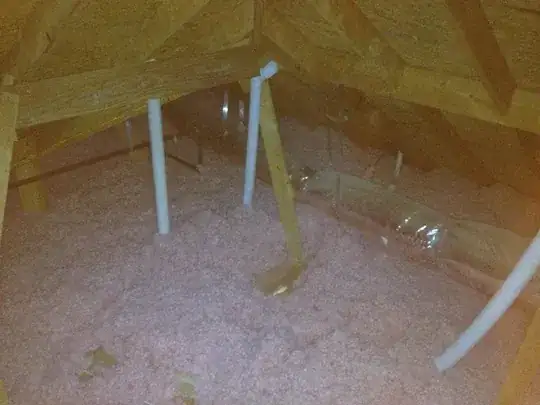
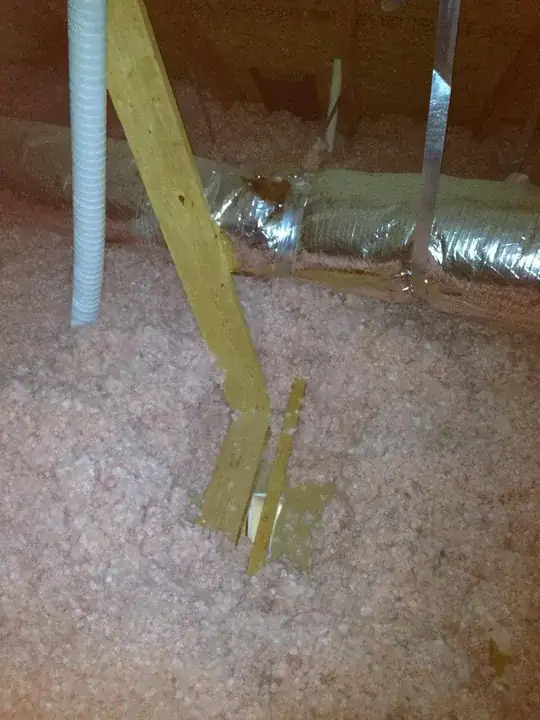
enter image description here enter image description here

FreeAsInBeer
  • 163
  • 1
  • 2
  • 8
  • 1
    There is nothing in the picture that will tell you if the wall is load bearing. When you say the joists are east and west are you saying the ceiling or floor joists? – DMoore May 02 '13 at 01:59
  • One thing about load bearing walls is that they carry a lot of weight. If you go to try and cut one of the studs with a sawzall it will get stuck because of all the weight coming down on your sawzall blade. I don't advocate using this as a method to identify a load bearing wall, but it should be a warning sign to stop what you are doing immediately if you go to cut. – maple_shaft May 02 '13 at 02:12
  • DMoore: So it's common for non load bearing walls to be topped with multiple 2x4's? I'm referring to the ceiling joists. maple_shaft: That's good to know! Thank you both. – FreeAsInBeer May 02 '13 at 03:12
  • Normal walls, load bearing and not, will have two 2/4's at the top. Multiple 2/4's like this are not an indication of load bearing. You're going to have to take out a section above a door or window and see if there is a header. – Edwin May 02 '13 at 04:45
  • 1
    Possible Duplicate: [Are there ways to determine if a wall is load bearing](http://diy.stackexchange.com/questions/4/are-there-ways-to-determine-if-a-wall-is-load-bearing). – Tester101 May 02 '13 at 11:45
  • @Edwin: This wall is a short (~3.5 feet) section of wall dividing the toilet area from the rest of the bathroom. As such, there are no windows or doors in this piece of wall (just a single electrical outlet). – FreeAsInBeer May 02 '13 at 13:19
  • Those are really interesting pictures. There are no braces on any of the crosses. Man it sure looks to me like it might be load bearing but it doesn't look like it could hold up anything. Anyone else familiar with this type of framing... its not normal around my parts. – DMoore May 03 '13 at 18:23

1 Answers1

7

OK normally load bearing walls will have 2 plates on top. But having 2 plates means nothing.

People frame however they learned to or want. Checking door header also means nothing. Some people flip all door headers - doesn't make the wall load bearing. You can never get into the head of the guy who framed your house. I worked for a construction company in college... the owner taught everyone to basically frame every wall like it was load bearing - 2 top plates and headers flipped was a minimum. I asked him one day why we were doing this and he basically said - Well it might cost an extra $10 on some walls but we never have to worry or redo anything.

You told me this wall goes in same direction as attic joists... That is a good sign. You need to get into the attic and see what it is attached to. If it isn't supporting a joist it isn't load bearing. If this wall is just floating between 2 joists - even with a few 2x4s for cross bracing - it is not load bearing.

However if there is structural bracing in the attic it is/could be load bearing. Or if it is directly under a joist.

You have two choices to figure this out. Get up in the attic or tear down enough drywall to figure out what you have. If you are a gambler and want this wall down just tear out the drywall - you will have to remove it to the joist on each side to redrywall anyway.

DMoore
  • 47,296
  • 15
  • 79
  • 187
  • Rare that a partition wall parallel with the floor or ceiling joists would be load bearing. Usually the joists end at a point that is load bearing. this is in the center of the building or along the parameter. load bearing areas will have posts supporting beams in the basement, where joists rest on the beam. – shirlock homes May 02 '13 at 10:12
  • I've been up in the attic, but I haven't gone all the way to the bathroom area since it's difficult to reach. I'll probably go up there just to double check, but what would I be looking for when removing more drywall? Should I be removing some of the ceiling drywall, or just from the wall? Am I looking to see visible joists? – FreeAsInBeer May 02 '13 at 13:22
  • I think with the information we have it is 90%+ that it isn't load bearing. But I have seen newer homes use parallel walls with brace/post - metal top and bottom bracing with vertical beam. Personally I would open the wall. – DMoore May 02 '13 at 15:05
  • And Shirlock makes a good point. Check the basement under the wall. If there are no support beams/walls then I would bump up at wall to a 99%+ not supporting. – DMoore May 02 '13 at 15:09
  • @DMoore: We live in the south. No basement :/ – FreeAsInBeer May 03 '13 at 01:16
  • Well unless you are getting into that attic you are going to be ripping out drywall. Worst case scenario is there is bracing and you have to redrywall some or all the wall (and only take drywall out on one side to start with). I seriously doubt it is load bearing but it could be. – DMoore May 03 '13 at 05:50