8

UPDATE: April 22 What I ended up doing was removing the trim non-destructively. Above the door frame, it was clearly not load bearing, so I continued and was not so non-destructive. The end-result are doorways that are standard height (and I can walk through them without ducking)


ORIGINAL POST:
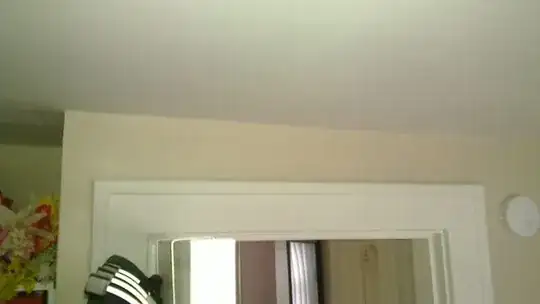
The 3 door frames on my second floor are 6 ft tall. Myself, being a hair over 6 ft tall, often hit my head. Our ceilings are also 7 ft tall, and we have sloped ceilings upstairs, so it already feels cramped

We don't have doors upstairs right now anyway. Instead of getting custom height doors, I'd prefer to increase the height of the frame and use standard size prehungs.

How can I safely do this (or determine that it will be safe to do this)? I don't know how to determine if these frames help with load-bearing. My guess would be the remove the trim, cut away the plaster above the door, remove the cross piece of the frame and nail another one into the top-plate of the wall. What I'd hate to do (or whatever, what my wife will yell at me for doing) is destroying part of the wall and frame, and finding out I can't do it.
enter image description here

mike
  • 3,000
  • 17
  • 30
Scribblemacher
  • 663
  • 2
  • 6
  • 14

1 Answers1

2
  1. Remove trim.
  2. Remove door casing.
  3. Remove drywall around jack studs (2x4 closest to door opening on each side) and pretty much all the way up to the ceiling. Stop if you have roofing structure above your door - keep going if you don't.
  4. Pull out jack studs (you could just extend them with a piece of 2x4 on non load bearing walls)
  5. Push up header to desired height. You will have to take out the cripples (small 2x4s) above the header. I don't think the door in your picture is going up a foot with that trim.
  6. Put in new longer jack studs on each side.
  7. Install new, longer door.
  8. Drywall, mud, tape, all that good stuff - this might take the longest.
  9. Install new, longer trim. You could use old trim if you could find some casing that will fit on the bottom corners and if door is same width.
DMoore
  • 47,296
  • 15
  • 79
  • 187
  • It might be part of the roof structure. – HerrBag Apr 13 '13 at 16:26
  • 2
    A load bearing header is supporting things above the door. But it's also possible that the wall isn't load bearing. You also don't want a drywall joint in the corner of a doorway (it can easily crack), so you should open the wall up at least one stud past the king stud on each side of the doorway. – BMitch Apr 13 '13 at 17:51
  • Agreed on both - that is why I said get rid of drywall to jack studs and up. With wide trim they might not have to do much taping/mudding. As for roof structure... could be - obviously they can't cut things above the cripples unless they are sure these aren't load bearing. But even if load bearing you can go up to the load bearing beams with your header. I guess I should have said the header isn't supporting the walls... There could be a roofing structure above but you will have to open it up to see. – DMoore Apr 13 '13 at 19:42
  • Once you remove the jack studs, any load being supported by the header will be unsupported, so don't remove any structure until you know for sure. It's usually obvious if the header is load bearing, the 2xn's should be a pair installed vertically plus a spacer between to match the thickness of the wall, instead of flat with the top of the door. – BMitch Apr 13 '13 at 20:47
  • 2
    I am all about safety precautions but I don't see how taking out two jack studs that are 30 (or less) inches apart for a few minutes is going to ruin the integrity of the house. I have reframed many doors in load bearing walls. I have had to use supports for a couple of double pocket doors but never for a small door. If it is load bearing just make sure your header is level after reframing. If you actually have roof structure above the door then that is a different story. But then that is really end of the story of hanging new doors. – DMoore Apr 14 '13 at 07:01
  • Want to comment on this again because we shouldn't be confusing people. herrbag - you are right about the roof structure - if its under there then game over. BMitch - you are confusing people on load bearing walls/doors. A load bearing header may displace some weight on a load bearing wall but the load should/will be on the king studs. The header is often on its side so that it cannot bow/warp with added pressure. This header should not be holding up the wall as you infer. You can remove the jack studs and header without your wall tumbling down on you - don't confuse DIYers. – DMoore Apr 15 '13 at 16:16
  • And an educated guess... If there is not roofing structure right above... I would guess looking at the slant of the ceiling, given this is on the top floor, that it is not a load bearing wall. – DMoore Apr 15 '13 at 16:18
  • If there are hollow voids over the door above the trim, re-framing the opening is possible, bearing or not. One can determine the presence of voids with little or no damage to finish. If it's all solid wood in there, it will not be a DIY project. – bcworkz Apr 16 '13 at 00:13
  • 1
    What I ended up doing was removing the trim non-destructively. Above the door frame, it was clearly not load bearing, so I continued and was not so non-destructive. The end-result are doorways that are standard height (and I can walk through them without ducking. – Scribblemacher Apr 22 '13 at 01:01