4

I'm trying to determine how to best vent plumbing for basement bathroom I am putting in.

The nearest main stack is around the corner and kind of a mess with connections. I'm not sure I'd be able to tie into it very well.

So, I was thinking I would go out the wall, but looking at some code, I'm not sure that's an option. The wall goes out directly below a window (or just off to the side). And it also looks like the vent needs to be at least 10' above the ground?

If it was ran up the wall on the outside of the house to get that high, it'd then be below a soffit, which is also prohibited if I'm understanding correctly.
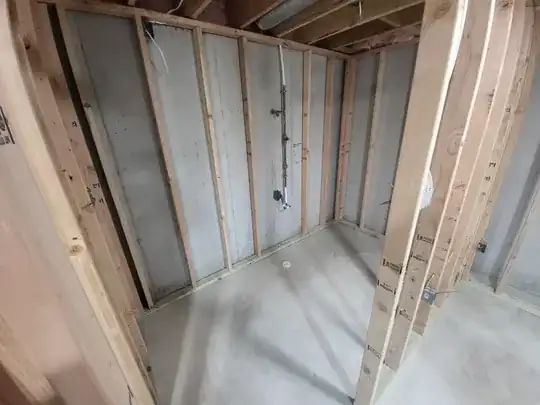
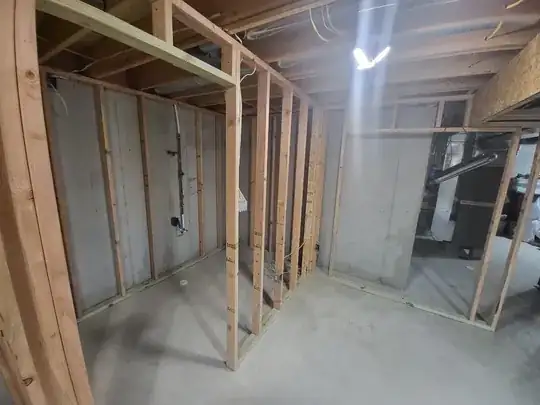
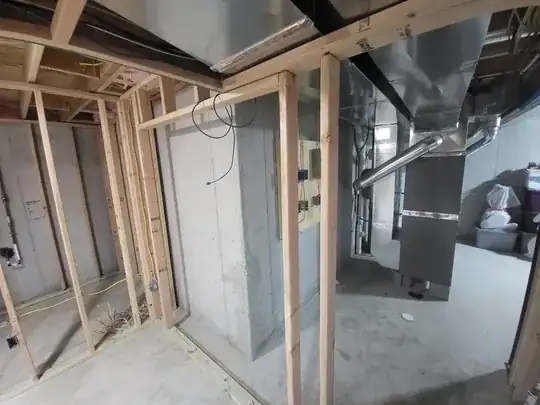
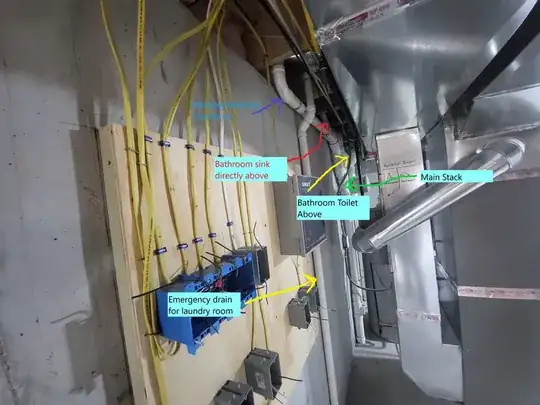
The space as is

Side wall

Corner

Stack View

Edit:

Turns out the studor vent was acceptable at my location. It really was the only reasonable option.
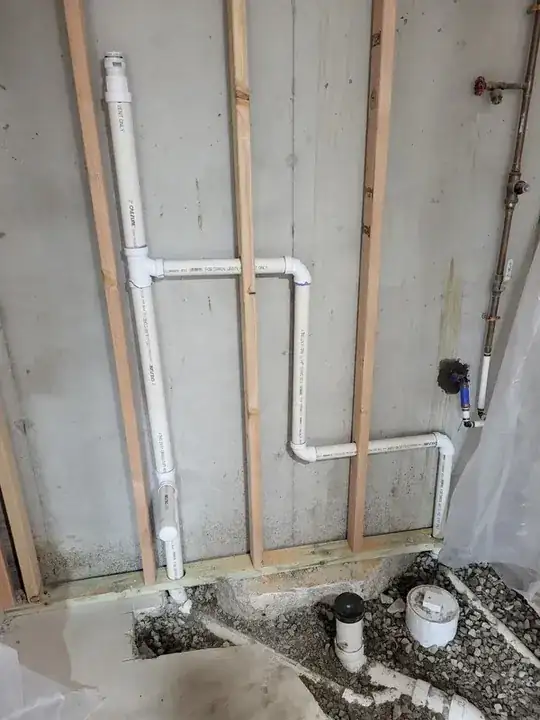
Complete

Kevinicus
  • 67
  • 1
  • 7

2 Answers2

1

Normally they go up inside the walls, and join somewhere above before going out the roof. The only stack you can connect to in a basement is one (such as a dry vent stack, or sink-only-stack of sufficient size for a wet vent) that does NOT have a toilet connected above. Stacks with toilets entering above are not legitimate vents under the last several decades of plumbing rules in most locations.

The other common approach, which I'm not personally fond of, is to install a mechanical vent, air admittance valve (aka Studor, a brand name of one such) - if you choose that option, be sure to install it as high as possible in the room, but accessible for easy replacement - they do fail and need replacement. (Which is why I don't like them, much.) The lower (closer to drain water, say when you are plunging a clog and sloshing it around) they are mounted the faster they fail. When they fail, they stink until you replace them.

Ecnerwal
  • 174,759
  • 9
  • 212
  • 440
  • So, I'd have to find the line from the sink from the bathroom above that connects to the main stack, and not tie into the main stack at all, as it would have a toilet going to it? I added some pictures. – Kevinicus Feb 01 '23 at 17:23
  • That would depend on the size of that pipe and your applicable code. You might need to go further up to join a dry vent or section of stack (above the drains) that is a dry vent, or you might do better with something like the kitchen sink - depends on your plumbing layout and on your code. – Ecnerwal Feb 01 '23 at 17:42
  • Okay. I think that pipe is 2", but I'd have to measure. I think the kitchen sink is out as the stack it is on is across the house from that stack. And the 3rd stack only serves one bathroom on the top floor, so it'd have a toilet. It's looking more and more likely to me that I need to go out the wall, but I don't know how that will work either. – Kevinicus Feb 01 '23 at 18:10
  • @Kevinicus - I don't know why you keep talking about "stacks", you do not connect vents to drain stacks, unless they're vertical continuations with no drains connected. Your 1st floor toilet likely has a 2" or larger vent in a nearby wall, you just need to connect your 2" vent from the basement to that at a point above the bowl rim. Vents can run horizontally too. There are length and load limits, consult your local code for details. – kreemoweet Feb 01 '23 at 20:54
  • Where joining another vent, "6 inches above the flood rim of the highest fixture on the floor served" is typical language - so not just above the toilet bowl height. Usually 6" above sink height, or above laundry standpipe if applicable. – Ecnerwal Feb 01 '23 at 21:16
  • Sounding more and more like I'll have to go up and do some damage to the floor above. I did see what I think may be the vent for the above toilet between the joist space, coming off the drain, but I'm not certain. I've reached out to the plumbers who worked on the house during construction to see if they could provide some input on how they have things laid out. – Kevinicus Feb 01 '23 at 21:23
0

Vent stack:

A vent is a dry pipe that carries no water (except for rain that may fall into the open end) and this pipe "connects" to the sky. A stack is a vertical pipe

The easiest place to find a vent stack is on the rooftop, second easiest is in the attic, if it passes through the attic to get to the rooftop.

But when you're doing basement construction neither of these places is particularly convenient, but they do give you a starting point to locate existing vent stacks.

A vent stack will usually be placed on top of a drain stack so if you want a to vent into the vent stack vent you need to connect to the stack somewhere above the fittings that use the vent stack (above the fittings themselves, not merely the point where the connect to the drain stack)

From the roof, use a weight on a string or a powerful light to look inside the vent stack to see how far it remains vertical, run some water through appliances to see how far it remains a vent stack. Be prepared to deal with a messy string and weight when you're done exploring (eg: gloves, zip-loc and scissors).

This will give you some idea about what wall you may need to cut open.

Jasen
  • 17,695
  • 1
  • 19
  • 31