1

I am installing in-ceiling speakers. However those come in with an adapter that transforms from 100-240V to 24V. I want to hide the adapter, preferably in the ceiling of my house. According to NEC that is not allowed.

The manufacturer of the speakers is based in UK and they explicitly state on their manual that for US installs(only) NEC prohibits the adapter being stored in the ceiling.

Reading on here I think the reason is this:

NEC requires a distinct separation of low voltage wiring and high voltage wiring

More information here.

What other options do I have to hide the adapter or hide it in the ceiling but make it NEC compliant?

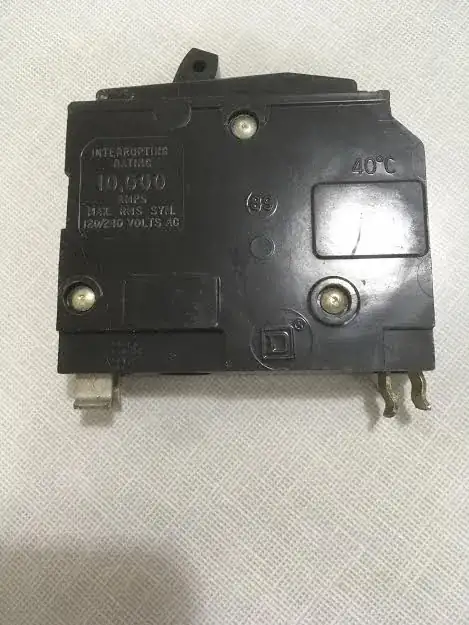
EDIT As requested I am adding a few images of the setup.
enter image description hereenter image description hereenter image description here

Arthlete
  • 111
  • 2
  • How is audio getting to the speakers? Typical installation would be to run a set of low-voltage and signal wires to the speakers but *not* run 120V or 240V. – manassehkatz-Moving 2 Codidact May 24 '21 at 20:16
  • @manassehkatz-Moving2Codidact The speakers come in pairs. One speaker has an in-built amplifier with wifi connection and then wires from that speaker go to the other speaker so together they can build a stereo output. The 2nd speaker uses the amplifier from the first speaker. – Arthlete May 24 '21 at 20:18
  • 2
    I don't see how that NEC section applies to your situation. To me it reads as you not being able to say, use 1 pair of cat5 for mains, or run 12v DC in a conduit with mains. It doesn't prohibit having them both under the same roof... – dandavis May 24 '21 at 20:26
  • @dandavis I updated my question. Basically the manufacturer states that NEC does not allow the adapter being in the ceiling. I am waiting on the manufacturer to tell me which NEC code I would be violating if I put the adapter in the ceiling. – Arthlete May 24 '21 at 20:30
  • 2
    you can get a 24v DC adapter that's legal to go in the ceiling/plenum. Meanwell makes some decent ones for decent prices. They are hard-wired (not plugged) and sealed; no fans or slats. You can also legally plug in the existing AC/DC adapter to a plain wall socket, then feed/extend the DC cable up through the wall, into the ceiling, and to speaker A. NEC cares very little about low-voltage DC. – dandavis May 24 '21 at 20:35
  • @dandavis that sounds great! Any chance that you can link me one that is legal to go in the ceiling? I've been researching for a week now but couldn't find anything. I would really appreciate it. – Arthlete May 24 '21 at 20:43
  • 1
    you just need to make sure it's "class 2", which they always brag about if applicable. see https://www.elementalled.com/low-voltage-safety-understanding-class-2-compliance/ for the rules. for example, https://www.amazon.com/Meanwell-Approved-Outdoor-Waterproof-Transformer/dp/B00GIF45DY/ – dandavis May 24 '21 at 20:46
  • @dandavis Thank you. Do you mind if you put that as an answer so I can accept it as an answer to the question? – Arthlete May 24 '21 at 20:47
  • 1
    Yes, but let's wait a little bit for some pros to see it. They will not be shy to mention it if something I said is wrong or lacking, and more eyes are better. – dandavis May 24 '21 at 20:50
  • 1
    The link in your question is to a doorbell transformer. Most loudspeakers require more power, and better cleaner power, than is produced by doorbell transformers. Most doorbell wiring and most Cat5 cabling is also inadequate for use with loudspeakers. Can you provide links to the actual PSU and system you are installing? Then perhaps suggestions could be made. – jay613 May 24 '21 at 21:03
  • @jay613 good call, I added some photos. I think this should make things clear. Let me know if I need to add anything else. – Arthlete May 24 '21 at 21:20
  • 1
    Hey @Arthlete if you end up with that adapter in the ceiling expect it to fail - and plan for how you can remove and replace it... The most likely thing to fail in systems I've deployed end up being cheap power bricks ... Will be fine for a year or two, but then suddenly nada... – Mr R May 24 '21 at 22:26
  • 1
    after more feedback and suggestions, I stand by my solution and think it gives you the safety/compliance you need and the aesthetic you want. I don't care about the mouse pellets, just hope I helped... – dandavis May 25 '21 at 23:01
  • @dandavis I ordered a few adaptors from MeanWell based on your suggestion. That is the route I decided to take. Thank you. – Arthlete Jun 03 '21 at 21:18

1 Answers1

1

Don't put this DC PSU inside the ceiling. These kinds of adapters are not 100% reliable. Sometimes they get hot. Sometimes they fail. Sometimes the connector for the AC supply fails.

Find a suitable serviceable location for the PSU, near an existing or new power socket where it can be plugged in. You can run the DC cord into a wall and to the first loudspeaker.

If the location you want the PSU is too far from the speaker for its existing DC cable, my suggestion would be to cut that cable in half, and splice in a length of 16/4 individually shielded pairs (two pairs). Use one pair to extend the power, and the other pair could be used for the speaker's Aux In connection should you wish to use it in future. The shielding may not be necessary but it's cheap and might help reduce hum and noise. Ground the shielding at the PSU end.

jay613
  • 28,850
  • 2
  • 36
  • 112
  • I don't want to run cables through the walls, that's why I got speakers with a built-in amplifier. Is the class II adapter somebody mentioned earlier not going to be sufficient for the ceiling? If not I will just return the speakers. – Arthlete May 25 '21 at 17:03
  • Even if you could bury the supplied PSU in the ceiling, how were you planning to supply it with power? – jay613 May 25 '21 at 17:58
  • I was thinking about setting up a new outlet in the ceiling. – Arthlete May 25 '21 at 19:52
  • 1
    There are special boxes for this. It would be unusual to install one in the ceiling, but basically a compliant metal box with a door that you could paint to match the ceiling, and *inside* the box is an outlet and this PSU. You could put it right next to the speaker and run the cable out of the new enclosure through a grommet and plug into the speaker. I'm guessing that getting power TO a new outlet would not require extensive new cabling, hence your preference for that? – jay613 May 25 '21 at 19:56
  • 1
    Let me add, if you don’t mind, that code and safety issues aside I’m not a fan of very expensive integrated widgets like this. Too many vendors have their fingers in your ceiling … all the apps that are built into it, and too many failure points. I’d install a pair of normal wired speakers (very nice ones for that price), wire them to a useful location and get a reasonable Class D amp and a separate Chromecast puck. Then when, say, Google has a fight with Spotify (or whatever battle impacts your listening) you only need a new $40 dongle or when the amp fails you only need a new $100 amp. – jay613 May 25 '21 at 20:12
  • That sounds like a very clever solution. Getting power to a new outlet would not require extensive new cabling. Yes, that is correct. What I wanted to achieve with these speakers is have music play throughout my entire house. There's no way to run cables from an amp to all rooms and areas in my home right now. Otherwise I would gladly do so if I could. – Arthlete May 25 '21 at 20:53