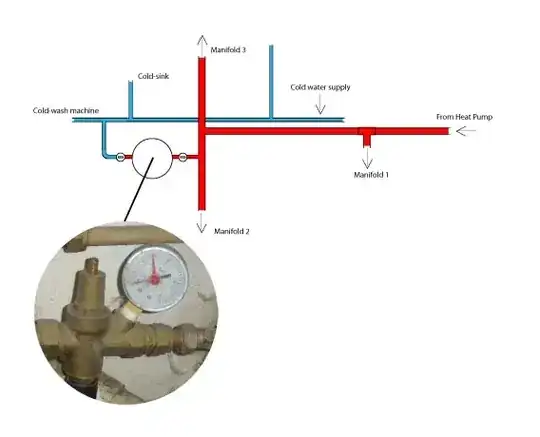
Here's an attempt at a simplified answer. Your heating system has to get filled with water at some point. In normal operation, it will be re-heating and re-circulating the same water, and have no interaction with your domestic water supply. However, if the heating loop loses water (e.g. if there is a leak, or if it is drained, or if you extend the system) there needs to be a way to add water into the system.
Because the heating loop should be kept at a limited pressure, this is typically done with a pressure-reducing valve, as you have pictured. This lets the higher-pressure cold water supply flow into the heating system, but only when the heating loop is below a certain pressure. This avoids over-pressurizing your heating system, which would lead to premature wear and failure.
In addition, there is usually a backflow prevention valve installed between your cold water supply and the pressure-reducing valve. This ensures that even if there is an unexpected drop in cold water supply pressure, your heating water is not sucked into your domestic water supply. You want to avoid that as your heating water has been sitting for a long time in pipes and fixtures that may not be rated for domestic water, and you don't want to drink that. A backflow prevention valve is purely a safety device, though, and may not have been required when your system was installed (although US building codes do now require them for new work).