6

I am replacing a gas oven igniter. On my model I had to remove the whole bottom burner in order to unscrew the bracket. I was very surprised that the burner is very loosely attached to the gas valve. In fact there are huge open holes near the attachment. How does it work? Why doesn't the gas escape through that, but instead goes directly into the burner?
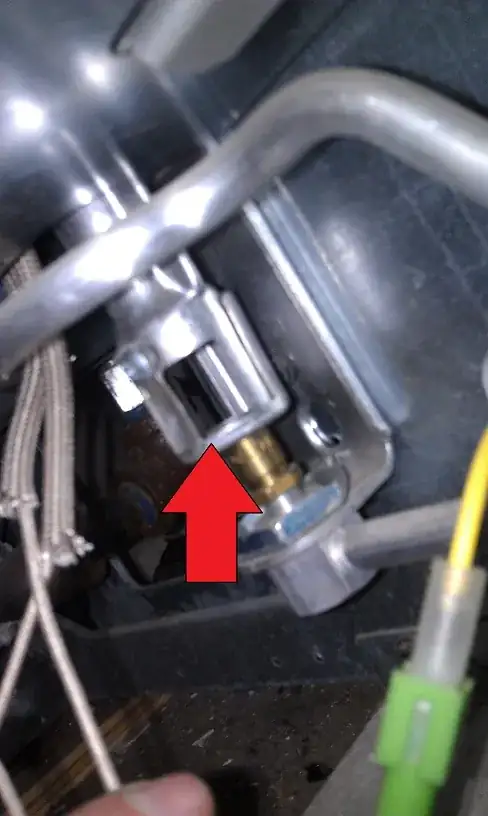
Burner attaching to a gas valve

Tester101
  • 130,386
  • 77
  • 314
  • 605
Vitalik
  • 667
  • 2
  • 8
  • 17
  • 1
    It is called primary air mixture, the gas is injected from the port and draws air alon with it as primary gas air mixture secondary air is used at the burner head – UNECS Dec 14 '12 at 10:47
  • 3
    Expanding on what UNECS said; preferably, there is no air (oxygen) in your gas lines. As you need oxygen to combust a gas, that opening allows air to come into the mixture. I've seen a similar setup to this working on a central air furnace. Its perfectly normal for there to be an opening there. Pressure keeps the gas flowing in the direction it needs to go. – lsiunsuex Dec 14 '12 at 11:45
  • @UNECS that should be an answer. – The Evil Greebo Dec 14 '12 at 13:21
  • @lsiunsuex yours too. Silly people. ;) – The Evil Greebo Dec 14 '12 at 13:21
  • @The Evil Greebo yeah I know but I'm on my phone so couldn't be bothered. – UNECS Dec 14 '12 at 19:52
  • 1
    the reason why it doesn't create a gas leak is the [venturi effect](http://en.wikipedia.org/wiki/Venturi_effect) – ratchet freak Dec 14 '12 at 21:54
  • @ratchetfreak Thanks for the name. Unfortunately, WP article does not explain anything. It only gives that pressure is lower in narrow pipe but this does not imply that it is lower than the surrounding environment. It is easy to believe only if your gas pressure is lower than atmospheric one. Otherwise, I can easily demonstrate a situation where you have higher pressure in a pipe A despite it has lower pressure than pipe B. The has will escape the pipe only if it has higher pressure than 1 atm. So, it venturi is very misterious -- has must escape the hole since its pressure is higher than air. – Little Alien Nov 07 '16 at 16:23

1 Answers1

4

(based on comments)

The opening is called a Primary Air Mixture.

Gas flowing through the line from the service point passes this opening, picks up air (oxygen), mixes and is ignited at the burner head.

Pressure in the line keeps the gas flowing. As there should not be air (oxygen) in the gas lines, this port allows the proper amount of oxygen to mix into the gas allowing ignition. Most gases (all?) require oxygen to burn.

lsiunsuex
  • 2,823
  • 7
  • 27
  • 33
  • Depending on your definitions, oxygen may be required for *anything* to “burn”—because “burn” is often defined by the presence of oxygen in the chemical reaction. – KRyan May 15 '20 at 21:22