5

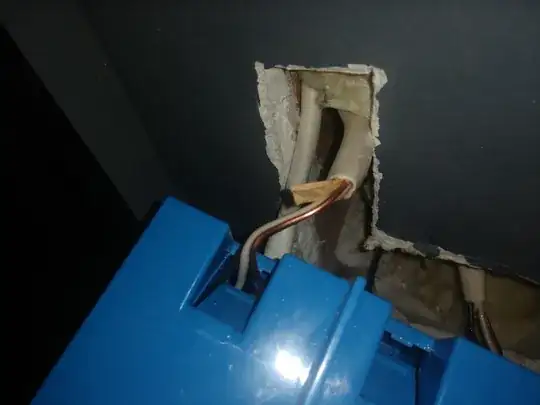
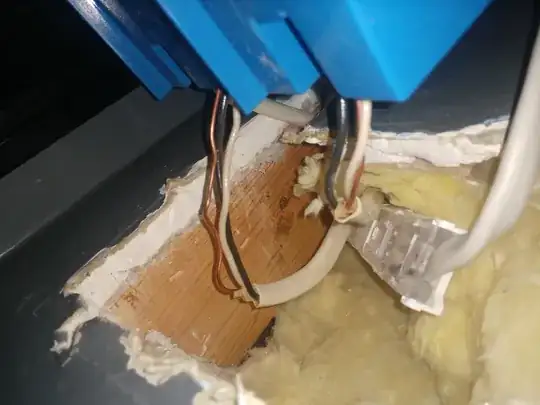
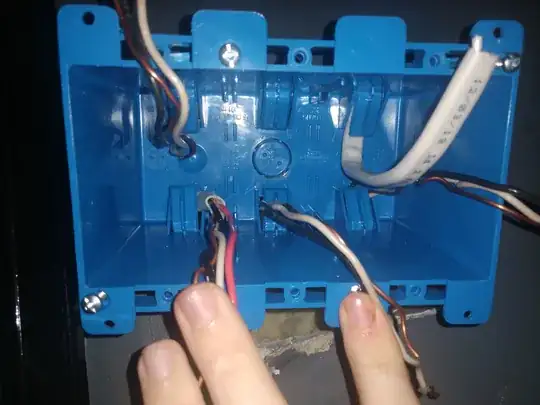
I'm replacing a couple switches in a bathroom with smart switches and ran into a problem. The previous owner redid the bathroom and the switch box in question had 5 Romex cables (four 12/2, one 12/3) going into it. Only one of them had any sheath past the integral clamps (my understanding is there should be a minimum of 0.25 inches). When removing the switch box to see why I couldn't get any slack, I found that the rest of them had between 2 and 5 inches unsheathed before the box.

Am I supposed to add a junction box above it in the wall to splice all of the cables to add new cable that is long enough, raise the switch box 6 inches, or something else?

Edit: pictures added for 1. Inside junction box 2. Small divot cut out to make finding sheaths easier 3. NM splice kit
  • Is there an attic or basement above/below the bathroom? You could pull the cables back and splice them, make sure the junction box is accessible. – beswald Jan 14 '20 at 20:31
  • 1
    Remember that if you add a junction box, it needs to be accessible. It cannot be buried behind drywall, for instance. – SteveSh Jan 14 '20 at 20:32
  • @beswald, there may be some room up there but a bunch of shelves were put in to the wall blocking the only entrance to the attic that I can find. – James Endicott Jan 14 '20 at 20:50
  • @SteveSh, thanks for the reminder. I've used a Tyco NM splice kit before since I know they are made to be used outside of a junction box. I was just hoping there would be a better way than using 5 of them to get so little extra distance. – James Endicott Jan 14 '20 at 20:56
  • Those Tyco NM's aren't allowed to be used here. NEC was revised to outlaw them almost anywhere, except in very narrow use cases. This isn't one. Also, on the shelves put up, are you *quite* sure they blocked the attic access? Shelves have a back panel so the book doesn't scrape the wall, and it's common to build bookshelves with "hidden" removable back panels so you can get to utilities etc. This may get you to the attic. Or [Narnia](https://youtu.be/Ed_qmcoQNaY?t=26). Or [Longbourn](https://youtu.be/ybrU4s2KBbI?t=254). – Harper - Reinstate Monica Jan 15 '20 at 00:55
  • @Harper-ReinstateMonica -- not quite so -- using NM-interconnectors for concealed wiring repairs like this is *explicitly* permitted by 334.40(B) – ThreePhaseEel Jan 15 '20 at 02:25
  • Can you provide us with a photo of the inside of the switch box please? – ThreePhaseEel Jan 15 '20 at 02:26
  • 1
    NM splice for 334.40(B) to replace romex after white wire snapped when fighting it https://ibb.co/r0H4JfM View of divot cut out to find where the sheath was for particularly bad ones https://ibb.co/XYn2Rdb Inside of box https://ibb.co/gtKjDJ1 – James Endicott Jan 15 '20 at 09:22
  • Your images aren't loading for me. Please edit your post and attach them there. – isherwood Jan 15 '20 at 19:17
  • I can see the images James posted in his comment OK. – SteveSh Jan 15 '20 at 19:18

1 Answers1

3

I would get some white heat shrink slide it over the conductors and make sure it extends inside the box the 1/4” and at least it’s width past where the sheath was removed.

I have skinned the outer sheath several times in the past. The inspector only asked to verify if it was listed and then asked me to change from the black shrink tubing to match the color of the existing outer sheath. Way cheaper than tyco splices. My jurisdiction allows this others may not.

Ed Beal
  • 101,306
  • 4
  • 72
  • 150
  • 1
    I have used shrink tube to splice on a section of jacket. You want the one with the adhesive inside, the regular heat shrink pulls off pretty easily. – batsplatsterson Jan 15 '20 at 18:52
  • Yes the adhesive style also seals that’s why it needs to be slipped on its width past the point of damage or in this case removal.+ – Ed Beal Jan 15 '20 at 18:55