5

I (a beginner) would like to build a table of this form.
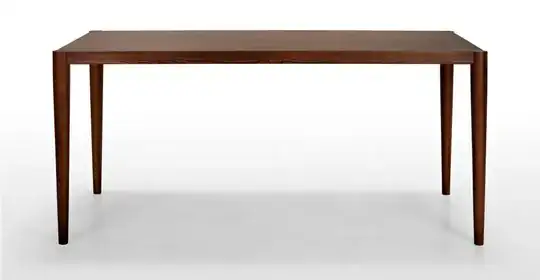
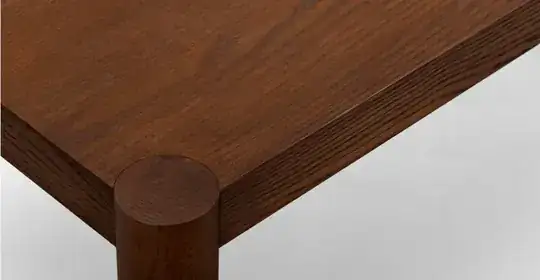
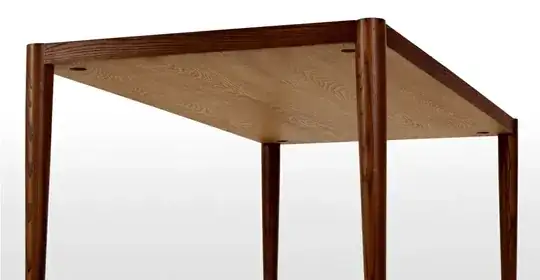
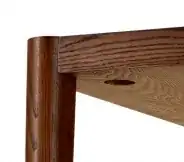
Table view Table view corner Table view underside

Does anyone know what kind of corners are used to connect the legs, or any other construction tips.

Tester101
  • 130,386
  • 77
  • 314
  • 605
user6453
  • 151
  • 1
  • 2

1 Answers1

9

It could possibly be done using Mortise and Tenon joints, however, it looks like this table simply uses Hanger Bolts.
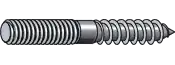
enter image description here

If you look at a picture from the bottom of the table,
enter image description here

you'll notice there are holes bored in the underside of the table top. This is likely where the nut would be attached to the bolt, which is in turn screwed into the leg.

Tester101
  • 130,386
  • 77
  • 314
  • 605
  • 4
    And I wouldn't put too much faith in a table built using this technique, personally. The entire load of the table is relying on the shear strength of four little bolts... – The Evil Greebo Jun 12 '12 at 17:25
  • @TheEvilGreebo: Presumably the table top is resting on top of all four legs. – Vebjorn Ljosa Jun 12 '12 at 17:33
  • 1
    Look at the pictures closely - the table top is notched with a 1/4 round cutout to fit the legs, and the legs are topped level with the top of the table. It's *possible* that there is a mortice joint hidden inside that cutout that's simply secured by the hangar bolt but I wouldn't bet on it without actual disassembly of the table. – The Evil Greebo Jun 12 '12 at 17:42
  • Actually, in the image shown, the table top is simply bolted to the side of the table leg. While it's possible to design a table with bolt-on legs where the legs themselves actually pick up the weight (my kitchen table has legs that use hangar bolts to attach to a frame under the tabletop), it's not mandatory and I've seen many a coffee table with exposed leg tops. – KeithS Jun 12 '12 at 17:43
  • 2
    Getting a hanger bolt design like that to work properly is NOT a good task for a first timer. Those angled holes in the tabletop are going to be a major pain to do right the first time, four times in a row. Once those are in correctly, the legs are not going to just automatically line up for tightening at exactly the right height and angle. Whoever built the example table likely had a fancy jig and drill set made expressly for the purpose. – Wayfaring Stranger Jun 12 '12 at 23:45
  • @TheEvilGreebo: A proper bolted joint never relies on the shear strength of the bolt. Instead, the bolt is only in tension and it is the friction between the clamped surfaces that prevents the movement of the joint. In an improper bolted joint, you might rely on the shear strength of a 1/4" fastener, which still exceeds 300 pounds. – ArgentoSapiens Jun 13 '12 at 00:21
  • I agree completely. That should give you an indication of what I think about that particular join. ;) – The Evil Greebo Jun 13 '12 at 13:39