6

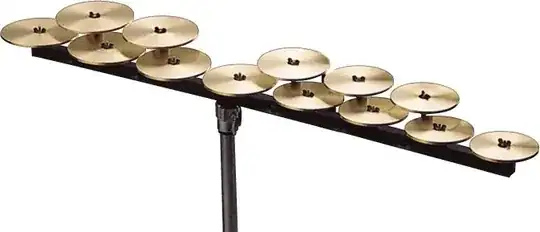
At our school, we are playing a piece called "Metal", composed by Brian Balmages. The percussion part denotes the crotales and glockenspiel playing together quite often. TThere is a major problem with this, because our crotales are incredibly out of tune. Even playing 2 notes within itself such as an octave produce beat, so I know that it isn't a problem with the bells. For those of you that don't know what are:

Picture of Crotales

I am unsure of how to deal with this, because I don't think that my school would allow me to shave part of them off, because too many things can go wrong. And if the note was sharp, shaving can't help in that case, because shaving will make the note go higher. So to fix the pitch of this beautiful instrument, I need an alternative method of shaving them.

Cody Guldner
  • 931
  • 2
  • 11
  • 32
  • 1
    Could cleaning be an issue? It's an issue with many school instruments I've known. Any kind of buildup or patina is going to affect the physics (ergo acoustics) of metals. – luser droog Mar 05 '13 at 05:18
  • 1
    The common term for the sound that tells you you aren't in pitch is [beat](http://en.wikipedia.org/wiki/Beat_%28acoustics%29), though I have to say I much prefer "wavy sound pitch"! – leftaroundabout Mar 05 '13 at 21:34

1 Answers1

9

Your two options really are shaving them down (assuming they aren't dirty with excess mass to begin with) or adding weight--probably with some kind of heavy gum or resin either near the center or edge of the crotale.

I would first recommend analyzing the actual pitch of each crotale using a tuner, or if possible a musical spectrum analyzer so you can see multiple harmonics of a single note.

A group of physicists have actually published a scholarly article on the topic, which seems to indicate there is a challenge in making sure both primary harmonics of the crotale are in tune with each other.

As is the case with most percussion instruments, you get what you pay for. A high-quality set of crotales should last a lifetime with proper care, but might be a bit more expensive than a cheaper alternative. If the crotales have been played in a way that has left them dented or physically damaged, that might be the source of the problem.

If only a few notes are strongly out of tune, you might be able to get away with purchasing only those individual notes--Steve Weiss Music has Zildjians for $85/pitch. If they've been damaged or are otherwise untunable, it might be time for the band program to buy a new set of crotales.

NReilingh
  • 34,804
  • 6
  • 102
  • 169
  • Its sad because the crotales are only a few years old – Cody Guldner Mar 05 '13 at 18:26
  • 1
    I definitely agree that you get what you pay for, but I'm not sure shaving is a viable option. Being made of metal, it would require special tools, and once you shave, you can't take it back. Crotales are used more for their timbre than their pitch, and the timbre is so rich with overtones, that people usually overlook any inconsistencies of pitch (much like tubular bells or crash cymbals - which have indefinite pitch.) – jjmusicnotes Mar 05 '13 at 18:27
  • @jjmusicnotes I _certainly_ don't recommend doing anything potentially destructive unless you have professional help! Probably should have mentioned that in the answer. :) – NReilingh Mar 05 '13 at 18:32
  • haha, I figured you meant that. My comment was more for the OP. ;) – jjmusicnotes Mar 05 '13 at 22:10
  • So if there isn't any way to tune them based on our budget, we just deal with it? – Cody Guldner Mar 25 '13 at 18:01
  • @CodyGuldner You didn't specify how they were out of tune or if you did any measuring with a tuner. If the notes are sharp you can try correcting by adding weight, as I mentioned at the top of my answer. – NReilingh Mar 25 '13 at 23:07