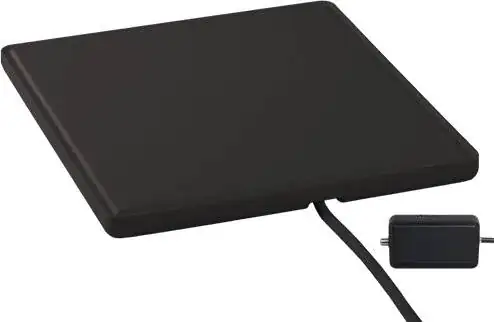
First things first, there is no such thing as a digital antenna, RF does not care whether the underlying modulation is digital pulse, FM, AM, SSB, Chirp or Spread Spectrum.
Second, if you live any distance away from the transmission antenna, the more aluminum overcast you have, the more signal strength you receive. Whether it's inside or outside, size does matter. VHF/UHF Yagi-Uda or Log-periodic antennas increase gain and narrow the beamwidth as you add elements. UHF Half-wave arrays increase gain and narrow the beamwidth as you add bays to the array.
Third, antenna configuration is dependent on the frequency, so VHF, UHF or both?
Fourth, length of the downlead is important as the longer the run, the more it absorbs the signal, requiring mast amplifiers to strengthen the signal before the SNR destroys it.
Now for some links to help figure things out. These are long term resources that can't be replicated here, so it will have to do.
From the people who gave us that fine Digital TV that allows you to enjoy Satellite Dish reception. Key in your Address, City, Zipcode and it will tell you High/Low VHF, UHF and best guess at signal strength. "No Signal" sometimes can be taken cum grano salis.
FCC DTV Reception Maps
This site is provided among a consortium that includes CEA and NAB (National Association of Broadcasters) to help figure out signal strength and antenna headings. It gives you a color code that's explained over on their Antenna Info page to help determine what type of antenna will best receive the signal (directional, high gain, general coverage, etc.)
AntennaWeb Antenna Selector
Directional antennas help cut down on multipath (The old ghosting now is signal jitter, annoying with analog, no signal with digital) but if the beamwidth is too narrow, require a rotator for off-beam signals.
High Gain antennas help improve the received signal strength so it doesn't cut out. Extreme range requires a mast mounted amplifier for yet more signal strength so DTV doesn't drive you insane.
While gain and directional capabilities are directly related (high gain, narrow beam), flat-landers often can get by with less gain and broader beamwidth, tailoring the gain to what's necessary to get a good picture while not having to rotate the antenna if most of the stations are clustered in a certain direction.