5

The wire on my lamp is too short, so I'm trying to replace it. The fitting/fixture (what's the correct term?) however doesn't play nice: I can't see the correct way to remove the old wire (and still be able to insert the new one).

I'm not seeing any screws at all, so it must be some sort of clip thing. I'm not too comfortable applying too much pressure to the plastic, as it might bend/break, before I know I have the correct point to insert my screwdriver.

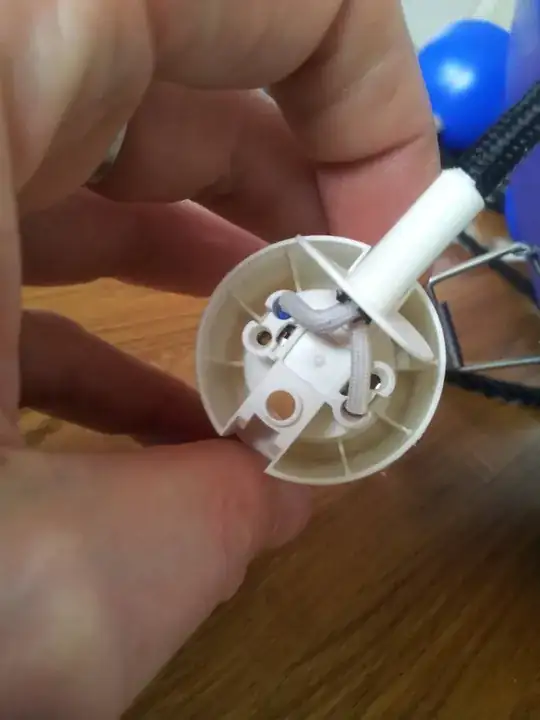
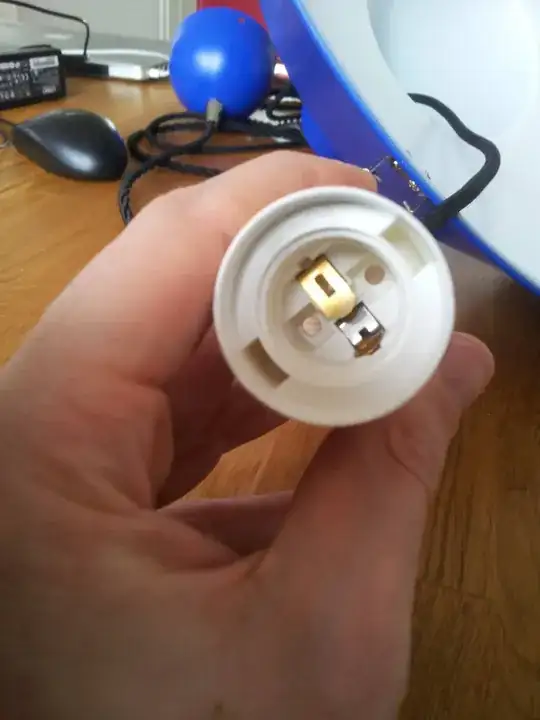
Some shots (I can provide more obviously):
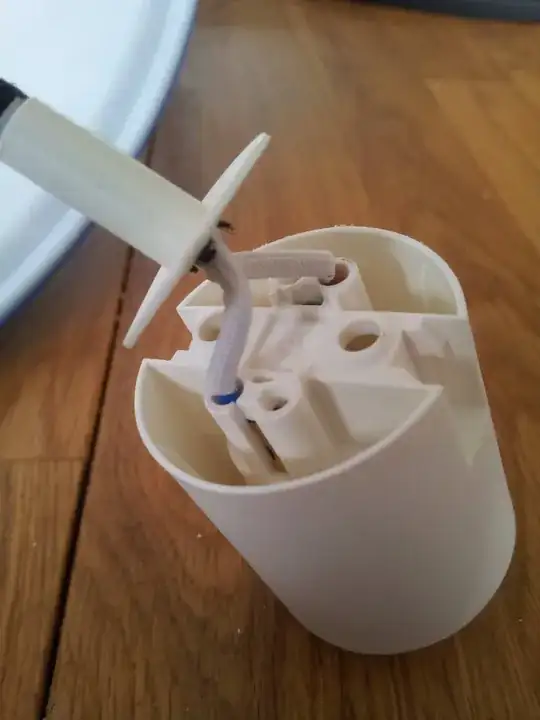
The top, from the side

Straight from the top

'lamp goes here' part of the fitting

ThreePhaseEel
  • 79,142
  • 28
  • 127
  • 220
Nanne
  • 285
  • 2
  • 7
  • 17

3 Answers3

3

I think I found the mechanism: There's a small hole to insert a screwdriver or something, which kinda keeps the wire in place. One of the wires required a bit more force then the other, that's why I was confused, but this seems to do the trick:

how to open this fixture

Nanne
  • 285
  • 2
  • 7
  • 17
  • One thing to watch out for. If that lamp fixture is a typical plug in unit it will be equipped with a stranded wire cord. On the other hand the type of crappy terminals in that lamp holder that use push in spring type contacts are not normally designed for use with stranded wire. As such you may notice that the wire ends that you removed from the spring loaded poke-in terminals may be specially adapted with a crimp on sleeve on the end of the wires. – Michael Karas Feb 16 '13 at 14:05
  • 1
    The point of my previous comment is that if you try to shove stranded wire down into the typical poke in spring loaded contact you are going to get an unsafe situation where the contact can be intermittent or be loose and lead to overheating in the contact area. This overheating can at the worst case lead to a fire. If fire does not happen the heat in the contacts can lead to heat damage to the plastic lamp socket causing it to become brittle and prone to breakage. – Michael Karas Feb 16 '13 at 14:11
  • I think I see what you mean, there was some sort of extra iron part on the default wire (crimp on sleeve?). I believe the current fix is save, but for completeness of this question: is there a way to adapt normal wire to something that fits in here? – Nanne Feb 16 '13 at 14:19
  • 1
    It is rather doubtful that the sleeve was made of iron. Much more likely it was a thin brass material. An adaptation for the stranded wire that can work is to solder the ends of the wire to make it "solid". This can work in a safe manner as long as there is little or no flexing of the wires in the area of the socket during normal usage of the lamp. Soldering puts a firm bond between all the wire strands and if the wire moves around the small strands just at the edge boundary of the solder will have a tendency to crack off over time. On the other hand the crimp in sleeve (cont in next comment) – Michael Karas Feb 16 '13 at 14:33
  • 1
    (cont from prev comment) does not create the same defined boundary to the strands of the wire and they can move around with respect to each other while cord flex happens. As a result the strand cracking is very much reduced. – Michael Karas Feb 16 '13 at 14:35
  • You're right, I used "iron" as wrong word for "anything looking slightly like that", but I get what you mean :). The cord will not be flexed I think, because it is fixed a bit higher up, but never say never :). Is it easy to get something for myself to apply those sleeves? I can solder a bit, that would be no problem, but if I'm going to be changing it anyway, I might as well try to get it sleeved like it was? – Nanne Feb 16 '13 at 14:58
  • If you have the tools to solder and the wires will not flex in usage then I would simply go the route of soldering the wires into a solid round shape so they can properly engage the poke in connectors. Do not forget to make sure to add those two heat resistant jackets to the wires. Trying to find a source for the brass type wire sleeves is a pain. Even if you can find them the cost to procure just two pieces will be prohibitively expensive. – Michael Karas Feb 17 '13 at 08:09
  • Check thanks! I feel your information should be molded into an answer. If you feel up to it I'll accept it, if not I'll add the tips to my own answer for easy reading. – Nanne Feb 18 '13 at 07:19
2

Instead of messing with the lamp socket, I suggest you just cut the plug off and splice in a longer cord. The lamp socket is probably the most engineered part of that lamp, taking in to consideration things like heat, part movement due to expansion, etc. Who knows what specifications that wiring has.

I recommend getting some butt splice connectors and some heat shrink and lengthening the cord instead. Make sure you use a wire gauge at least as large as the existing wire, or preferably bigger.

longneck
  • 20,634
  • 4
  • 47
  • 78
  • Not a real option, as the wire is very visible, and is to be replaced by a longer, but still a pretty one (no simple plastic unit, has some thread mesh thingy around it, etc). – Nanne Feb 16 '13 at 16:20
0

I have a similar fixing that I need to replace. There is a sprung contact adjacent to the hole for the conductor. Pressing down on the spring releases the wire. In this case bootlace ferrules have been fitted to the conductors. These can catch when removing the wire so you need to keep the pressure on the spring. Perhaps a two person job if you don't have a vice or similar to hold the fixing. I suspect you could insert a solid conductor without opening the spring. May be the same if you fit a ferrule to stranded wire. I think the key is to press just enough to insert the wire. Hope this helps.