13

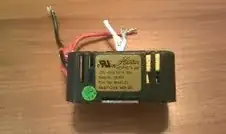
The lights on my harbor breeze fan stopped working this morning. When I came home from work, I got the ladder and took down the lights. I don't have a multimeter but I saw that there is this Watt Regulator (pic below) in the fan. I traced the wires and it seems that this may have been the culprit. I snipped the wires, got some wire nuts, and wired directly into the 120V circuit. Ta-da! Lights are back and fan is working normal.

Question is : What is the purpose of this watt regulator? Why do some fans include it?

alt text

Engineer2021
  • 3,265
  • 10
  • 29
  • 45
  • 2
    Can you post a pic of this where the label is legible? – Mike Powell Aug 27 '10 at 15:12
  • @Mike: I'll have to try. It says "120V 300W MAX" by Hunter. Part Number 98480-02 Hunter. UL certification here: http://www.google.com/url?sa=t&source=web&cd=4&ved=0CCIQFjAD&url=http%3A%2F%2Fdatabase.ul.com%2Fcgi-bin%2FXYV%2Ftemplate%2FLISEXT%2F1FRAME%2Fshowpage.html%3Fname%3DATNZ2.E307650%26ccnshorttitle%3DAppliance%2BControls%2B-%2BComponent%26objid%3D1078775838%26cfgid%3D1073741824%26version%3Dversionless%26parent_id%3D1073744115%26sequence%3D1&ei=pg14TM_OJYH7lweQuPTGBQ&usg=AFQjCNFhhCk444U8Nu-kx5YsL9CACdWlQA – Engineer2021 Aug 27 '10 at 19:11
  • See comment on Mike Powell's answer. – Tester101 Oct 05 '10 at 16:36
  • 4
    I should add that a year later, this fan is still working great w/o the regulator. – Engineer2021 Aug 28 '11 at 23:48
  • Thanks so much for the info I almost gave 49.95 to replace the part i did not need, now that i bypassed it it works just fine and the way they installed it you can bypass it with no tools just hook the two whites together and then the other two together the electrical ends are made for this to work –  Oct 15 '11 at 17:54
  • 4
    nearly 3 years later and no fires or problems. Fan works great – Engineer2021 Apr 01 '13 at 12:02
  • Thank you all for your collaboration! I ran into this issue luckily this was the first place I came. Bypassed the stupid regulator and fan works great. You won't need this regulator u less you try to put ridiculous bulbs in there. Thanks again every one for saving my land lord $50 ;-) –  Apr 01 '13 at 06:49
  • 3
    And... it's still going! – Engineer2021 Feb 10 '14 at 12:48
  • Just came across this post as I just had to rip this out as well. I added a zwave smart dimmer and the LED bulbs I had put in would not dim. After ripping it out and bypassing it by wiring the lights direct they dim now. I am not concerned about the 190 watt limit anymore as with led bulbs I doubt they draw more than 5 watts each! – duckworth Aug 10 '19 at 21:45
  • Thank you for this - bypassed and it works just fine. Especially since I have LEDs in there now and the high watt limit will never be a concern now. – Paul Sturm Apr 25 '20 at 17:27

3 Answers3

14

Here's the real story:

http://www1.eere.energy.gov/buildings/appliance_standards/residential/ceiling_fans.html

As required by the Energy Policy Act of 2005 (EPACT 2005), the U.S. Department of Energy (DOE) has established test procedures and energy conservation standards for ceiling fans and for ceiling fan light kits.

Ceiling fan light kits with any other socket type including but not limited to candelabra screw base sockets, intermediate screw-base sockets, 2-pin halogen sockets, and bayonet sockets manufactured on or after January 1, 2009, shall not be capable of operating with lamps that total more than 190 watts and must be packaged with lamps that together total 190 watts or less. DOE indicated in a January 11, 2007, final rule that it recognizes that manufacturers may choose to follow one of several possible design pathways to ensure that the light kit is not capable of operating with lamps that total more than 190 watts.

http://www.regulations.gov/#!documentDetail;D=EERE-2006-TP-0121-0003

DOE is interpreting the 190-watt limit on power consumption for certain ceiling fan light kits as a design requirement. This approach will require that manufacturers incorporate some measure such as a fuse, circuit breaker or current-limiting device to ensure the light kit is not capable of operating with a lamp or lamps totaling more than 190 watts.
Philip Ngai
  • 3,413
  • 1
  • 19
  • 20
  • 2
    +1 for referencing the (somewhat silly) regulation. I'm a little confused as to why the device in question would be labeled **MAX 300W** if the regs require less than 190W of lighting – mac Nov 29 '12 at 15:21
  • 1
    @mac , The other 110 watts would likely account for the fan motor. – Zv_oDD Nov 01 '16 at 01:38
  • I stumbled across this question, while replacing a light fixture and wondering what this widget was for. I kind of understand the watt-limiting. Thing is, the light fixture says it's limited to 14 watts (no ventilated at all). So you could still put 20X that rating in, and the watt-limiter wouldn't kick in, but you'd probably still have a fire. And it's HIGHLY unlikely someone will manage to put in more than 300 watts, since there are only two sockets. – RustyShackleford Apr 14 '23 at 19:23
  • Is this a light fixture with a ballast? – Philip Ngai Apr 18 '23 at 00:34
6

The Wattage regulator has nothing to do with speed of fan or brightness of bulbs or for a remote. It is a safety feature that prevents the fan from overheating. If you install bulbs that exceed the specified wattage, the wattage regulator either shuts off the bulbs or limits the wattage they receive to prevent overheating. Contact the manufacturer and they should send you a new light kit.

Diveon
  • 61
  • 1
  • 1
3

A regulator would normally be used either to change the speed of the fan or the brightness of the lights. If this regulator didn't have any external controls like a pull chain, is there a chance this fan at one time had a remote control?

Mike Powell
  • 9,284
  • 1
  • 21
  • 42
  • brand new fan.. did not come with a remote control. I just installed it about a month ago – Engineer2021 Aug 27 '10 at 11:06
  • 1
    It's possible that this model and a more pricey model are both manufactured at the same time. The only difference being the more expensive fan gets an RF receiver to control the regulator and this one does not. This is common practice in manufacturing, and possibly the reason the fan has "extra" parts. It's even possible that this model is ready for a remote, they just did not include one and charged less because of it. This might also explain why the lights stopped working, if something was on the same frequency it could have turned them off. – Tester101 Oct 05 '10 at 16:31